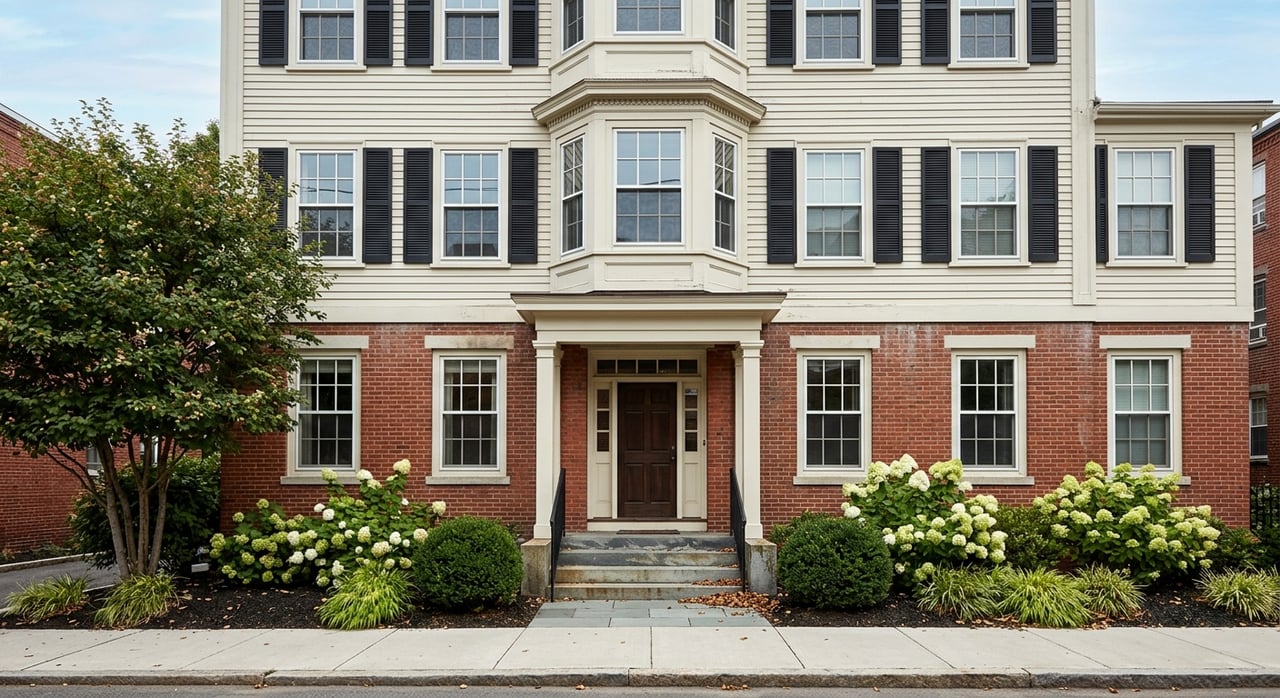
Buying your first home in Providence often starts with one big question: should you go for a condo or a multifamily? If you are trying to balance budget, lifestyle, and long-term goals, that choice can feel especially important in a market where good listings move quickly. This guide will help you compare both paths, understand key Rhode Island rules, and focus on the questions that matter most before you make an offer. Let’s dive in.
Providence market basics
Providence is a competitive market for both condos and multifamily homes. In Rhode Island Association of Realtors Q1 2026 data, the median sale price in Providence was $432,500 for condos and $645,000 for multifamily properties.
Current listing ranges show how wide the market can be. For many first-time buyers, condos often fall somewhere from the mid-$200,000s to the mid-$500,000s, while multifamilies often start in the mid-$300,000s and can climb past $1 million depending on size, condition, and location.
Timing matters too. Available market data shows Providence homes generally receive multiple offers and sell in about a month, with condos tending to move a bit faster than multifamilies. If you are shopping in areas like the East Side, Fox Point, College Hill, Downtown Providence, Federal Hill, Elmhurst, Blackstone, Edgewood, or Wayland, it helps to be ready before the right property appears.
Providence is also considered fairly walkable, with a Walk Score of 76. For many first-time buyers, that adds to the appeal of condos and smaller multifamily properties near shops, restaurants, parks, and daily conveniences.
Why many first-time buyers choose condos
A condo is often the simpler ownership model. You own your unit, while the condominium association manages shared areas and building-level responsibilities under Rhode Island condominium law.
That can make condo ownership feel more manageable if you want a lower-maintenance entry point into the Providence market. You may have less day-to-day responsibility for exterior upkeep and common building systems than you would with a multifamily property.
Condos can also offer a lower price point than multifamilies in many Providence neighborhoods. For a first-time buyer, that may create a more accessible path into areas where single-family or multifamily options are harder to reach.
What to watch with Providence condos
The tradeoff is that the association plays a major role in your ownership experience. Under Rhode Island law, the association can adopt budgets, collect common-expense assessments, regulate maintenance and repair of common elements, and levy certain late charges or fines.
That means your due diligence goes beyond the finishes inside the unit. You also need to understand the building’s financial health, reserve planning, and any upcoming common-area work that could affect your costs.
For resale purchases, Rhode Island law requires the seller to provide key documents. These include the declaration, bylaws, rules and regulations, and a resale certificate showing the monthly common-expense assessment, unpaid common or special assessments, other fees, and anticipated capital expenditures for the current and next two fiscal years.
If you are looking at an older condo association, document review matters even more. Rhode Island’s current Condominium Law automatically applies to condos created after July 1, 1982, but some older condos may still be governed by earlier documents unless they adopted the newer chapter.
Condo questions worth asking
Before you move forward on a condo, ask for clear answers to a few basics:
- What are the monthly HOA dues?
- What is the reserve balance?
- Are there any unpaid common or special assessments?
- Are major capital projects planned in the next one to two years?
- Who handles maintenance for shared systems and common areas?
- Is the condo project eligible for the financing you want to use?
If you hope to use FHA financing, the project details become especially important. HUD says approved condo projects must be on the FHA-approved list, must meet owner-occupancy standards, and cannot have too many units seriously past due on association payments.
Why some first-time buyers choose multifamilies
A multifamily can offer a very different kind of first purchase. For some buyers, it is a way to live in one unit and use rent from the others to help offset monthly housing costs.
That strategy can be appealing in Providence, where multifamily housing is a familiar part of the local housing stock. It may also open doors for buyers who are comfortable taking on more responsibility in exchange for more space or income potential.
HUD’s FHA handbook allows owner-occupied two- to four-unit properties. It also says at least one borrower must occupy the property within 60 days and intend to stay for at least one year, and projected rental income from the other units may be used in qualifying under FHA rules.
What to watch with Providence multifamilies
A multifamily is not just a home purchase. If one or more units are rented, it also brings landlord responsibilities, property compliance issues, and more building systems to maintain.
That can mean more moving parts from day one. You may need to think about tenant spaces, shared utilities, deferred maintenance, and how older-building conditions could affect both your budget and your timeline.
Lead compliance is one of the biggest issues to understand. Rhode Island Department of Health guidance says most lead exposure comes from paint and dust in homes built before 1978, and rental properties built before 1978 are generally subject to lead-hazard mitigation regulations unless exempt.
If you buy a rental property, new owners or landlords must register within 30 days of acquisition or leasing and re-register annually by October 1. Rhode Island also requires rental properties to comply with the State Property Maintenance Code.
Multifamily questions worth asking
If you are considering a two- to four-unit property, these are smart questions to raise early:
- How will the lender count projected rent when qualifying you?
- What owner-occupancy timeline applies to your loan?
- Are any units currently rented, and under what terms?
- Does the property need a valid lead certificate?
- Are there lead-related repairs or mitigation steps needed before closing or before leasing?
- What major systems have been updated, and what may need work soon?
For many first-time buyers, the appeal of a multifamily is real. So is the extra responsibility. The right choice depends on whether you want simplicity or are ready for a more hands-on ownership role.
Older Providence buildings need careful review
In Providence, many condos and multifamilies are in older buildings. That is part of the city’s charm, but it also means first-time buyers should look closely at condition, records, and likely future costs.
Lead is often the first issue to review in pre-1978 housing. Rhode Island Department of Health guidance says sellers must disclose known and potential lead hazards before a sale, and buyers have a 10-day period to conduct a lead inspection or risk assessment before the contract takes effect.
If renovation, repair, or painting will disturb enough painted surface in a pre-1978 home, the state requires a licensed Lead Renovation Firm. That matters whether you are planning cosmetic work in a condo or larger repairs in a multifamily.
For condos, the main concern is often not just your unit but the condition of shared systems. Roofs, foundations, masonry, porches, heating systems, and common hallways can all affect future assessments and your overall ownership costs.
First-time buyer financing options to explore
For many Providence buyers, financing options can shape which property type makes the most sense. A condo that fits your payment goal may be easier to carry each month, while a multifamily may work better if your lender can count projected rent.
RIHousing offers several first-time buyer options worth discussing with your lender. According to RIHousing, first-time buyers must complete homebuyer education before closing on a RIHousing loan.
RIHousing also says its first-time homebuyer loan offers 100 percent financing and down-payment and closing-cost assistance. Its RI AnchorHome program is aimed at first-time buyers of primary residences and currently lists no PMI, 30-year fixed rates, and maximum loan amounts of $525,000 for single-family homes and $575,000 for two-family homes.
If the property needs work, a renovation loan may also be worth asking about. RIHousing lists a Homebuyer Renovation Loan and 203(k) option for homes needing renovations.
Condo or multifamily: how to decide
If you want a lower-administration purchase, a condo often makes sense. You still need to review documents carefully, but the association typically handles many shared-building responsibilities.
If you are comfortable with more complexity and want the possibility of rental income, a multifamily may be worth a closer look. Just be sure you understand the financing rules, property condition, lead requirements, and your role if you become a landlord.
A simple way to frame the choice is this:
- Choose a condo if you want easier day-to-day ownership, a potentially lower entry price, and a home that may fit a more lock-and-leave lifestyle.
- Choose a multifamily if you want to explore owner-occupying while offsetting costs with rent and are ready for greater maintenance and compliance responsibilities.
In Providence, both paths can work well for first-time buyers. The key is matching the property type to your budget, tolerance for upkeep, and long-term plans.
With Providence’s older housing stock, competitive pace, and neighborhood-by-neighborhood differences, it helps to work with someone who understands how character, condition, and strategy all fit together. If you are comparing condos and multifamilies in Providence, Lisa Ardente can help you think through the tradeoffs and move forward with clarity.
FAQs
What is the median condo price in Providence for first-time buyers?
- Rhode Island Association of Realtors Q1 2026 data shows a median Providence condo sale price of $432,500, though active listings can range much lower or higher depending on location, size, and condition.
What is the median multifamily price in Providence?
- Rhode Island Association of Realtors Q1 2026 data shows a median Providence multifamily sale price of $645,000.
What condo documents should a Providence buyer review?
- Rhode Island law requires resale buyers to receive the declaration, bylaws, rules and regulations, and a resale certificate with monthly assessments, unpaid assessments, other fees, and anticipated capital expenditures.
Can a first-time buyer use FHA financing for a Providence multifamily?
- HUD allows owner-occupied two- to four-unit properties under FHA rules, with at least one borrower required to occupy the property within 60 days and intend to stay for at least one year.
What should a Providence buyer know about lead in older properties?
- Rhode Island Department of Health says sellers must disclose known and potential lead hazards in pre-1978 homes, and buyers get a 10-day period to conduct a lead inspection or risk assessment before the contract takes effect.
Are there Rhode Island first-time buyer programs for Providence purchases?
- RIHousing offers first-time buyer loans, homebuyer education, down-payment and closing-cost assistance, and renovation loan options, depending on the property type and your eligibility.
