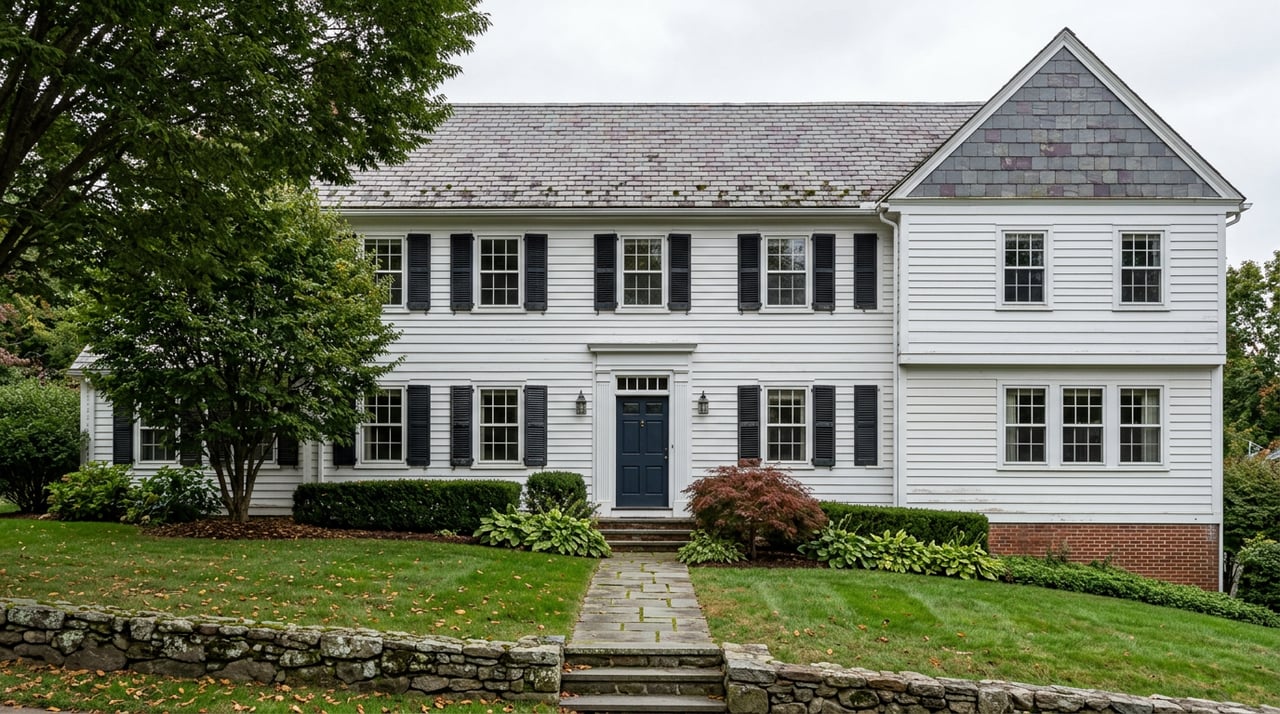
A homeowner on College Hill called her contractor about a window job last spring with a plan already half-built in her head: replace six failing sashes on the street-facing elevation, apply for the state historic tax credit, and use the credit to cover a chunk of the difference between vinyl and the wood units the commission would actually approve. The contractor had to walk it back. The credit she was picturing has never applied to a house like hers, not because of paperwork she missed, but because of a rule written into the program from the start.
That mix-up is common enough that it's worth spelling out clearly, because it points to something East Side sellers and buyers tend to get backwards. The renovation subsidy people assume is there mostly isn't, for owner-occupied homes. But the approval process people dread as slow and unpredictable has, for one of the most common projects, gotten noticeably faster.
What the Credit Actually Covers
Rhode Island's Historic Tax Credit is real, and it has done real work in this state. It has financed the mill conversions that reshaped parts of Providence in the 2000s, and it remains one of the more generous state preservation incentives in the country. But the credit was built for income-producing property. The Rhode Island Historical Preservation & Heritage Commission, which administers the program, states plainly that it is meant to restore historic buildings held for a trade or business or for the production of income, not to underwrite a family's own kitchen or window project. Private one- and two-family residences occupied by their owners fall outside it entirely.
The rate depends on use. Space rehabilitated for a trade or business can claim a credit worth 25 percent of qualified rehabilitation expenditures. Rental apartments and condominiums can claim 20 percent. A single-family house on Benefit Street or Hope Street, lived in by the person who owns it, qualifies for neither.
| Property type | Income-producing? | State credit eligible? | Credit rate |
|---|---|---|---|
| Owner-occupied single-family home | No | No | Not applicable |
| Owner-occupied two-family home | No (personal residence) | No | Not applicable |
| Rental apartments or condominiums | Yes | Yes | 20% of qualified rehab costs |
| Space rehabbed for a trade or business | Yes | Yes | 25% of qualified rehab costs |
The distinction matters most at the exact moment a seller is deciding how much exterior work to do before listing. If the plan is to replace a porch railing or repair a slate roof section to satisfy the commission before photos go up, that cost comes out of the listing budget in full. It doesn't come back as a tax credit, because the house was never the kind of property the credit was designed to reach.
A Program Under Its Own Pressure
The credit itself has spent this year in a fight for survival. The Providence Preservation Society reported that the credit carried a June 30, 2026 sunset date written into state law, and lawmakers introduced companion bills, S3151 and H8408, to extend the program to 2031 and raise the multifamily rate to as high as 30 to 35 percent for projects with an affordable housing component. Advocates including Grow Smart RI and Preserve Rhode Island pushed hard for the extension, pointing to a program that has driven more than $2 billion in investment and roughly a fifth of the state's new housing production over the past decade. Whatever the final outcome of that legislative session, the underlying eligibility line doesn't move. The credit has never covered an owner-occupied East Side home, and no version of the bill on the table this year proposed changing that.
The Part That Actually Got Faster
Here's the piece that runs the other direction from what most people expect. Sometime between late 2024 and the spring of 2025, the Providence Historic District Commission rewrote how it handles one of the most common requests it gets: window replacement.
Before the change, the commission's preservation planner, Jason Martin, was fielding three to four window inquiries a day, many from owners who assumed any replacement meant a public hearing, a wait for the next monthly meeting, and a real chance of denial, according to Providence Preservation Society. Martin said, "I've got owners coming to me freaking out."
The commission's own standard now: staff can approve a conforming window replacement without sending it to a public hearing at all.
The revised standards created a distinct review category for window replacement and shifted the commission's focus from insisting on wood in every case toward whether a proposed unit reads correctly on the building, meaning its proportions, muntin pattern, and sightlines match what belongs there. The city now keeps a list of pre-approved window lines, including products from Marvin, Pella, Andersen, Kolbe, and Boston Sash Company, that staff can sign off on directly.
For an East Side seller weighing whether to fix a failing window before listing, the practical sequence now looks like this:
- Confirm with PHDC staff whether the property sits inside one of the city's nine local historic districts. College Hill is one of them, and the district was expanded in 2021 to add roughly 90 additional properties on its east edge, in the area bounded by Hope, Angell, Governor, and Young Orchard streets.
- Get a professional evaluation of the existing window's condition, since the commission still prefers repair over replacement where repair is feasible.
- Submit a photographic survey and to-scale drawings comparing the existing and proposed windows.
- If the proposed unit is one of the pre-approved lines and matches the building's existing profile, staff can approve it without a hearing, often within days.
- Anything that doesn't conform, or work on a designated Landmark building, still goes to the full commission at its monthly public meeting, with a written decision required within 45 days of a complete application.
That 45-day figure is the statutory ceiling, not the norm. The city's own guidance notes that most applications requiring a hearing are decided within 30 days, and routine staff-level reviews, the category window replacements now often fall into, are typically finished in under a week.
What Still Has to Be Disclosed
None of this changes what a seller owes a buyer at the closing table. Rhode Island's real estate disclosure statute requires that if a property sits in a historic district, the seller must tell the buyer, along with a note that the property may be subject to construction, expansion, or renovation limits. That disclosure obligation exists independent of how fast or slow the PHDC process has become, and it's worth having answered before a listing goes live rather than during a buyer's due diligence window.
Where This Leaves a Seller
The honest budget for an East Side historic home separates two things that often get blended together. Exterior compliance costs, whether that's a matched window, a repaired porch rail, or slate roof work, are real costs the seller carries, not costs a state credit will offset for an owner-occupied house. But the process of getting that work approved, at least for the routine cases the commission now treats as staff-level reviews, is faster than the reputation it still carries. A seller who checks district status early, brings a contractor's condition assessment to the first conversation with PHDC staff, and sticks to the pre-approved product list can often clear exterior approval in the same week they'd spend waiting on an inspection response.
If you're weighing how much exterior work an East Side listing actually needs, or trying to figure out whether a house you're considering sits inside one of the city's nine local historic districts, that's a conversation worth having before the budget gets set in stone. Lisa Ardente has spent more than three decades on the East Side and has walked five of her own renovations through exactly this kind of review. Let's Connect.
A Few Questions Worth Settling Early
Does the commission review interior renovations? No. Interior work and paint color choices generally fall outside PHDC review. The commission's authority covers exterior changes visible from a public way.
Does historic district designation raise property taxes? No. Assessments are based on fair market value regardless of district status.
Can I install vinyl replacement windows? Wood has traditionally been strongly preferred, and vinyl has historically been rejected in nearly every Rhode Island historic district. The commission's newer standards weigh how well a window's appearance matches the building over its exact material, but any proposal still needs to go through the district's review process before it's installed.
This article is general information, not legal, tax or financial advice. Consult a qualified professional about your situation.
